Home |
ELIT brand 'Meterless' Computer-based Electrochemistry Instrumentation. - - Innovative technology at highly competitive prices - - |
| SITE MAP |
Learn About ISE Technology |
Printer-friendly Catalogue MS 'Word 97' 4xA4 pages |
MS 'Power Point' Presentation |
Contact Us Questions or Comments |
Price List |
Ion-Selective
Electrodes |
Mini ISEs |
Reference Electrodes |
pH Electrodes |
ORP Electrodes |
D.O. Electrodes |
Electrode Heads
ELIT
Ion-Selective Electrodes (ISE)
At the heart of ELIT Electrochemical Measuring Systems
|
Want to Learn More About ISEs ? Scroll down (or press down arrow or "Page Down" Key) to see introductory text and diagrams. Also see our Information and Education pages |
![]() CLICK PICTURE FOR ENLARGEMENT AND EXPLANATION | Use ELIT plug-in all-solid-state |
Click any ion name below for electrode specifications and descriptions of methods
for measuring ion concentrations in aqueous solutions.
Ammonium |
Barium |
Bromide |
Cadmium |
Calcium |
Chloride |
Copper |
Cyanide |
Fluoride |
Iodide |
Lead |
Mercury |
Nitrate |
Nitrite |
Perchlorate |
Potassium |
Silver |
Sodium |
Sulphide |
Thiocyanate |
(Sulphate) |
|
|
Click Here for a summary table of specifications for all ELIT ISEs.
|
The main advantages of Ion-Selective Electrodes are:
Note: ISEs are not generally used as precise analytical tools. Nevertheless, routine, rapid measurements can usually be expected to have an accuracy of around ± 10% and with careful analysis under ideal conditions some can achieve an accuracy and precision of better than ± 2% (1-sigma) - see chapter on Accuracy and Precision in our Beginners Guide to ISE measurements. Ion-Selective
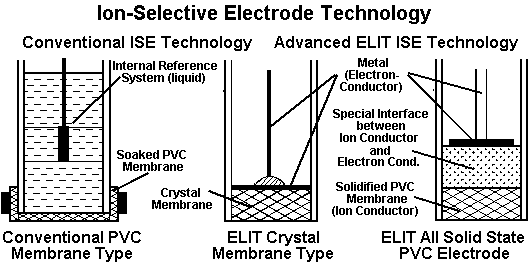
Electrodes measure the activity (or effective concentration)
of ions in a solution, rather than the actual concentration; the activity is always less than
the concentration because of
Other Essential (included) Components of an ELIT Ion Analyser:
|
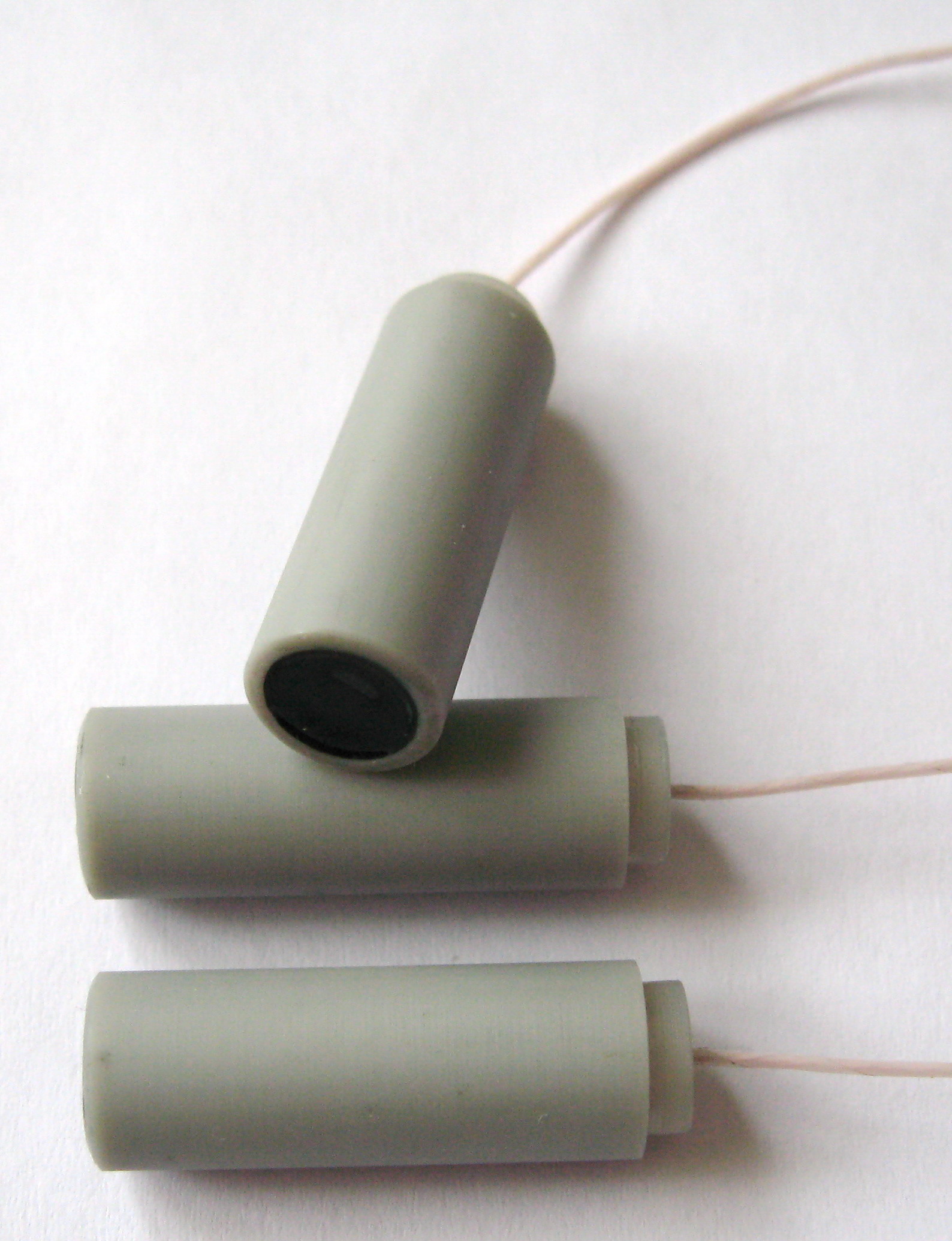
ELIT ion selective electrodes These electrodes have a solid state membrane and a solid internal contact - i.e. they do not contain any liquid or gel electrolytes. Their characteristics and advantages are:· Simple gold-plated plug-in connectors. · Robust and Durable. · Easy to handle. · Stable electrochemical potential. · Fast response time. · Function in any position. · No leaking of fluids. · Long shelf life and working life. · Can be stored and transported below 0°C. |
||
![]() |
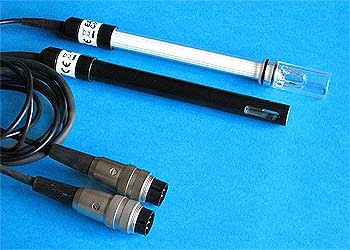
The ELIT Electrode Head System
ELIT Electrode Heads are manufactured
from a robust plastic material and fitted with low noise cables and
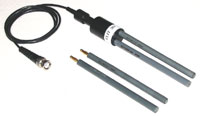
connectors which are compatible with any standard mV/pH/ion meter. Advantages of this 'electrode combination' over conventional combination electrodes:
|
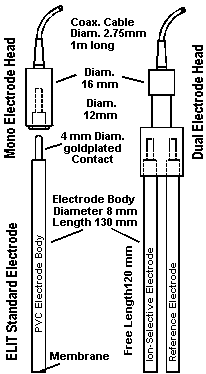
Six types of ELIT Heads are currently available:
|
|
ELIT Mini ISEs Nico2000 Ltd can also supply Mini ISEs with a range of tube diameters and lengths for special applications. These electrodes are fitted with a simple wire connector to allow maximum flexibilty for connecting to other equipment and are not suitable for use with the ELIT electrode head system.
|
|
ELIT Reference Electrodes
These electrodes are of a robust design
with 8mm diameter PVC bodies and gel electrolytes. Made to be compatible with ELIT ISEs, they must also be connected to the measuring system via an ELIT
Electrode Head. |
|
ELIT pH Electrodes
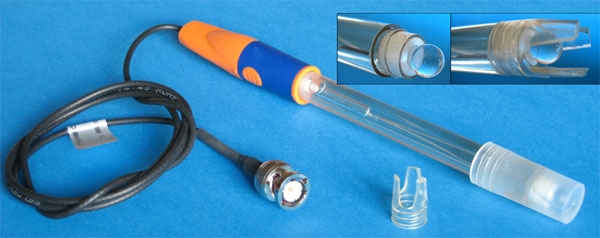
ELIT pH electrodes are basic combination electrodes with glass membranes and AgCl reference systems. They are fitted with cable and BNC connector for connection to any type of measuring system and do not require an ELIT electrode head connector or separate reference electrode. |
ELIT Redox Electrodes |
|
Specifications: 1) Type ORP-31C Cost effective Combination Electrode for General Applications. Temperature Range 0°C to 80°C. Dimensions 12 x 120 mm. Electrode suitable for Laboratory-, Field- and light Industrial Applications where the electrode is not submersed or under pressure. Platinum-Rod ORP Combination Electrode with Gel-filled Plastic Body, Protective Skirt, Single Junction Ag/AgCl Gel Reference with Fiber/Pellon liquid junction. 1 m Cable and BNC Connector. 2) Type ORP-32C Combination Electrode for More Demanding Applications. Temperature Range 0°C to 80°C. Dimensions 12 x 120 mm. Electrode suitable for Laboratory-, Field- and light Industrial Applications where the electrode is not submersed or under pressure. Platinum-Band (wrapped around a glass dome) ORP Combination Electrode with Gel-filled Plastic Body, Protective Skirt, Single Junction Ag/AgCl Gel Reference with Fiber/Pellon liquid junction. 1 m Cable and BNC Connector. 3) Type ORP-33C Combination Electrode for High Precision Applications. Temperature Range 0°C to 80°C. Dimensions 12 x 120 mm. Electrode suitable for Laboratory-, Field- and light Industrial Applications where the electrode is not submersed or under pressure. Platinum-Band (wrapped around a glass dome) ORP Combination Electrode with Re-fillable Glass Body, Single Junction Ag/AgCl Solution Reference with annular Ceramic liquid junction. 1 m Cable and BNC Connector. To prevent the electrodes from drying-out they must be stored in an O-Ring sealed bottle filled with Soaking solution. Operating Instructions: Preparation: 1. Remove the protective bottle from the sensing element and save it for storage. 2. Clean any salt deposits from the exterior of the electrode by rinsing with distilled water, dry with a lint-free tissue. 3. Connect the electrode to the Analyser or meter. Direct Measurements: Direct oxidation-reduction potential (ORP) measurements can be used to determine the oxidizing or reducing capability of a solution and are commonly made in polluted streams, chlorinated waters, industrial wastewaters and other water samples. 1. Prepare the electrode according to the Electrode Preparation section. 2. Set the Analyser or meter to ORP or mV measurement mode. 3. Place the electrode into the sample solution. 4. When the reading stabilizes, record the displayed mV potential and temperature. Maintenance: 1. Between measurements, thoroughly rinse the electrode with distilled water, dry with a lint-free tissue. 2. Keep in soaking solution bottle for Long-term Storage (over one day) 3. General cleaning: For non-organic contamination, soak the electrode in 0.1 M HCl for 10 minutes, rinse with distilled water. For organic or oily contamination, soak the electrode for 15 minutes in a 1:10 dilution of household washing liquid or a 0.1 to 0.5% liquid detergent solution mixed with hot water, stirred the solution at a moderate to fast rate. After one of the above cleaning methods, soak the electrode in pH4 buffer solution for at least 8 hours before measurement. Rinse with distilled water before use. Checking Electrode Operation: Checking the electrode is necessary only when there is evidence of malfunction that cannot be traced to other causes. Set the Analyser or meter to ORP or mV measurement mode (at 25°C), immerse the electrode in pH7 solution (saturated with Quinhydrone), the stable reading (E1) should be 86±15 mV. Next immerse the electrode in pH4 solution (with Quinhydrone), take the stable reading (E2), E2-E1 should be > 165 mV. Note: Platinum redox electrodes may give unstable readings in solutions that contain chromous, vanadous and titanous ions or other ions that are stronger reducing agents than hydrogen or platinum. Electrodes with an epoxy body should only be used in aqueous solutions. The ORP electrodes contain a Ag/AgCl) reference that may become clogged in solutions that contain silver complexing or binding agents such as TRIS, proteins and sulfides. Frequent cleaning may be required when measuring solutions that contain these agents. Proteins cause the additional problem of coating the electrode, so extra care should be taken to keep the electrode clean while measuring samples that contain proteins. |
|
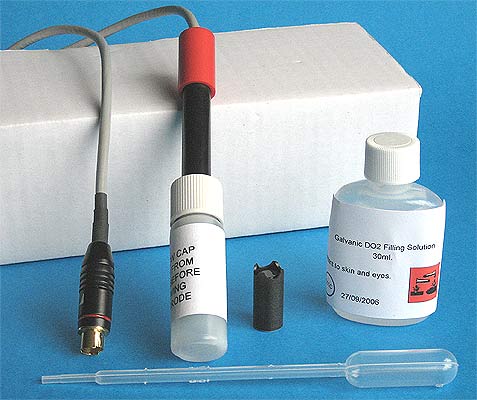
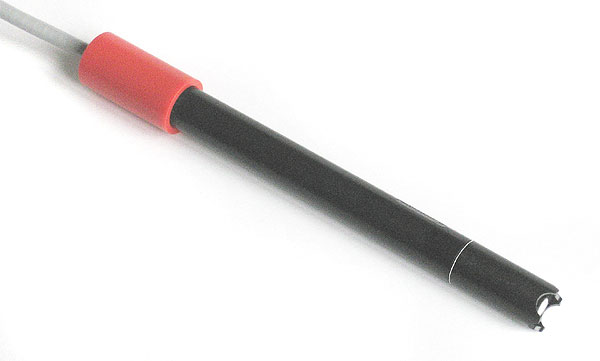
ELIT Dissolved Oxygen Electrodes (DO)
Introduction to DO sensors: Type Output at Saturation Output at Zero Oxygen Polarisation Voltage Membrane 601 Polargraphic 600nA +25% <1% Saturation 800 mV Teflon 602 Polargraphic 60nA +25% <1% Saturation 800mV Teflon 603 Galvanic 33-40mV <1% Saturation N/A Teflon When ordering please specify: 1) Length of cable required in metres.
e.g. 601/2/Th10k/5pin DIN. = 601 with 2m cable, 10k Thermistor ATC and 5 pin DIN Connector |
Go to: Information and Education pages | Prices and Ordering | Top of page
CCR - - - Nico2000 Ltd - - - Last Update: 23 June 2008